Gen AI War of the Worlds: The Global Battle for Artificial Intelligence
In an era where the development of artificial intelligence is progressing rapidly, the market for Generative AI has evolved into a global battlefield.
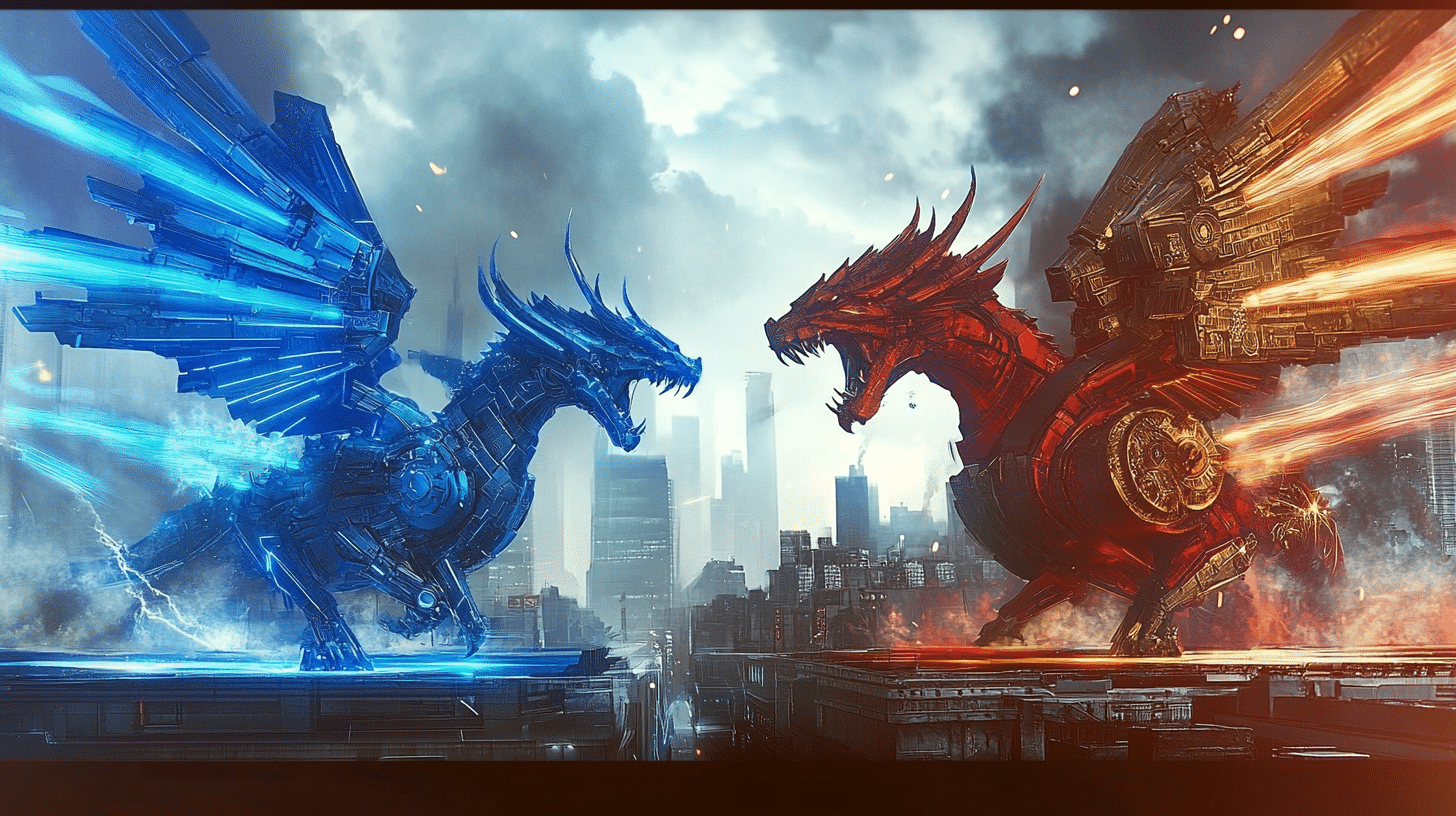
English edition — originally published in German as Gen AI Krieg der Welten: Die globale Schlacht um Künstliche Intelligenz.
The Status Quo: Who's Leading?
The American Stack: OpenAI and Google
The USA has dominated the generative AI market so far:
- OpenAI with ChatGPT and GPT-4: The face of the AI revolution
- Google with Gemini and PaLM: Huge resources, established infrastructure
- Anthropic with Claude: Focus on safety and reliability
- Meta with Llama: Open-source approach
These companies benefit from:
- Massive investments (billions of USD)
- Access to top talent
- Large cloud infrastructure
- Data advantages
The Chinese Ascent: DeepSeek and Qwen
China has driven massive developments:
- DeepSeek: New player with impressive performance
- Qwen (Alibaba): Powerful model for Asia
- Baidu Ernie: Established player
Surprising: Chinese models sometimes achieve comparable performance.
European Players
Europe is less strongly positioned:
- Mistral AI: French challenger
- Hugging Face: Open-source ecosystem
- German Approaches: Fragmented and less well-funded
The Rules of the Game: Hardware, Data, Talent
1. Hardware: The Chip Bottleneck
- GPUs are scarce: Nvidia dominates
- USA controls access: Export restrictions
- China seeks alternatives: Own chip development
- Cost factor: Training costs millions to billions
2. Data: The Oil of the AI Era
- Public data is limited
- Proprietary data is valuable
- China has advantages: Less data protection regulation
- USA/EU: GDPR limits data usage
3. Talent: The Smartest Minds
- USA has the best PhD programs
- Talent migration: Training in USA, return to China
- Salary differences: USA pays best
The Strategic Moves
The American Approach
- Proprietary Models
- API-First Monetization
- Alliances (Microsoft + OpenAI)
The Chinese Approach
- State-Backing
- Open-Source Strategy
- More Efficient Models
- Domestic Focus
The European Approach
- Strict Rules: AI Act
- Data Protection: GDPR
- Focus on "Responsible AI"
The Geopolitical Implications
AI is becoming critical infrastructure:
- Whoever controls the models controls the future
- Tech colonialism: Small countries dependent on large providers
- IP issues: Who owns training data?
Opportunities for Small Countries
Switzerland and Central Europe
- Neutrality as an advantage: Integrate technologies from everywhere
- Specialization: Don't compete with mega-models
- Quality over quantity: Score with quality
- Data protection as a security advantage: GDPR creates trust
What Deep Impact Services GmbH Does
- Practical AI integration: Not training LLMs themselves, but using them intelligently
- Building AI agents and operators
- Tailor-Made Software with AI
- Swiss quality and trust
Conclusion
The "War of the Worlds" over AI is an opportunity:
- Competition fosters innovation
- Decentralization: Open-source becomes more important
- Specialization pays off
The future belongs not to those with the best AI, but to those who use it most cleverly.